The Belgian design scene is vast and diverse. Belgian institutions are always at the forefront of supporting the people, new projects and products that make our country dynamic and unique.
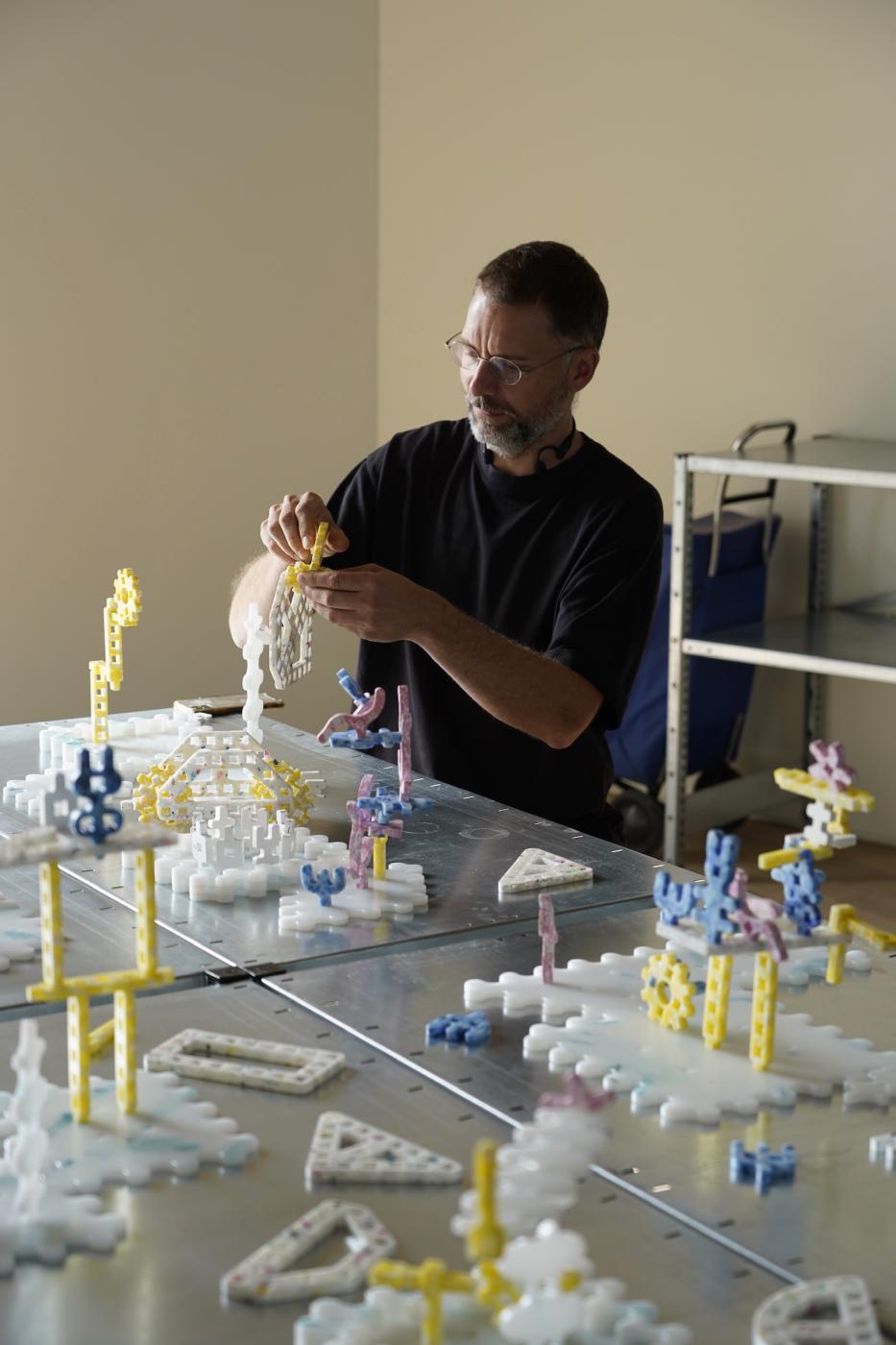
Combo Toys: A Trojan horse in the toy world
When you founded Combo Toys in 2023, did you want to create a toy, a design object or a teaching aid?
At the outset, Combo Toys had a business plan — and therefore a name, an artistic direction and sales objectives — which we gradually moved away from, to remain true to what drove us when we came up with the idea for this project: its social dimension. I am a sculptor. I have worked in publishing and I teach. All of these experiences, as well as becoming a parent, naturally led me towards creating not an object, but a full concept centred around limited-edition toys made in our workshops from recycled plastic. As the fruit of my collaborations with visual artists from the Belgian and international art scenes, these toys have enabled me to build bridges between users and the art world by inviting people, both adults and children, to embrace creativity, curiosity and imagination.
You have created several separate lines, including one called Signature, which gives the artists invited an opportunity to explore new forms of expression using the basic modules.
... But also enables users to get physically involved in the game. Combo Toys lets us explore the incredible depth of being human as well as our ability to follow new creative paths in joy, above all without any limitations.
The idea of social design as vector for communication is the focus of your approach. Tell us more.
In my practice as a sculptor, I have always placed great importance on the principle of collective work; a piece of artwork that can bring people together. The first time I presented my play modules at Wiels, a contemporary art centre in Brussels, around a hundred children immediately embraced the concept. It's proof that a toy that brings people together has relevance. My next aim is, in fact, to set up a workshop in Brussels: a workspace open to the public where children and adults will be able not only to play, but also to create their own module in half a day. They will therefore be creators as well as players.


